
Do Goldendoodles Shed? The Truth About Hypoallergenic Doodles
Last updated: 2026-03-24
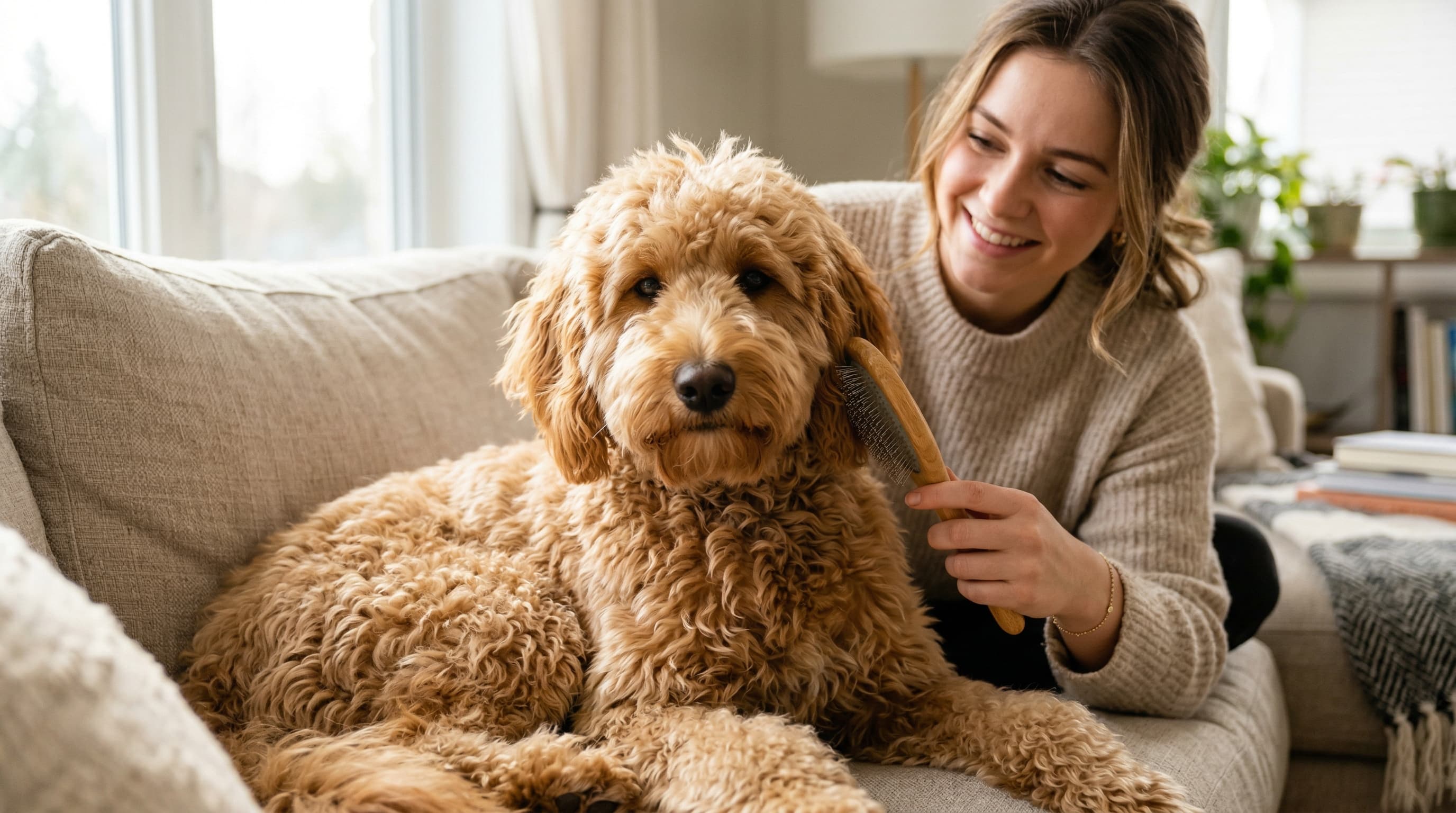
"Do Goldendoodles shed?" is one of the most common questions prospective owners ask — and the answer is more nuanced than a simple yes or no. While Goldendoodles are often marketed as "hypoallergenic," the reality is that shedding varies significantly based on the dog's generation, coat type, and individual genetics. In this guide, we'll give you the full picture so you can make an informed decision.
The Truth About "Hypoallergenic" Dogs
Let's start with an important fact: no dog breed is 100% hypoallergenic. The term "hypoallergenic" means "less likely to cause an allergic reaction," not "guaranteed not to cause one." All dogs produce allergens — primarily a protein called Can f 1 that is found in their saliva, urine, and dander (dead skin cells). When a dog sheds, these allergens become airborne on the shed hair and dander.
That said, dogs that shed less release fewer allergens into the environment, which is why low-shedding breeds like Poodles are popular among allergy sufferers. Goldendoodles, depending on their genetics, can range from very low shedding to moderate shedding — making some Goldendoodles an excellent choice for allergy-prone families while others are not.
How Coat Type Affects Shedding
Goldendoodles can have three main coat types, and each sheds differently:
Straight (Flat) Coat
Straight-coated Goldendoodles look the most like their Golden Retriever parent. Their hair lies flat against the body and can be quite long. These dogs shed the most of any Goldendoodle coat type — comparable to a Golden Retriever's shedding level. Straight-coated Goldendoodles are sometimes called "improper coat" or "unfurnished" because they lack the facial furnishings (the fluffy eyebrows and beard) that give Goldendoodles their signature teddy bear look.
Straight coats are most commonly found in F1 and F2 Goldendoodles, where the genetic lottery can produce puppies with more Golden Retriever coat characteristics.
Wavy (Fleece) Coat
The wavy or fleece coat is the most common and most desired Goldendoodle coat type. It falls in loose waves and has a soft, silky texture. Wavy-coated Goldendoodles shed very little — most owners report minimal shedding, comparable to what you might see from a human losing hair throughout the day.
Wavy coats require regular brushing (3–4 times per week minimum) to prevent matting, and professional grooming every 6–8 weeks. The effort is worth it — wavy-coated Goldendoodles offer the best of both worlds: low shedding with a beautiful, flowing coat that's easier to maintain than tight curls. Learn more in our grooming guide.
Curly (Wool) Coat
Curly-coated Goldendoodles have tight, Poodle-like curls that shed the absolute least. The shed hair gets trapped in the curls rather than falling onto your furniture and clothes, which is why curly-coated dogs are the most allergy-friendly. However, this also means the coat mats very easily and requires daily brushing and regular professional grooming to prevent painful mats and tangles.
Curly coats are most common in F1B, F1BB, and Multigen Goldendoodles with higher Poodle content. If you have severe allergies, a curly-coated Goldendoodle is likely your best option.
Shedding by Generation
The Goldendoodle's generation is the biggest predictor of shedding level because it determines the ratio of Golden Retriever to Poodle genetics:
| Generation | % Poodle | Typical Shedding | Allergy Rating | |------------|----------|-------------------|----------------| | F1 | 50% | Light to Moderate | Fair | | F1B | 75% | Very Low | Very Good | | F1BB | 87.5% | Minimal | Excellent | | F2 | 50% | Unpredictable | Variable | | Multigen | Varies | Low to Minimal | Good to Excellent |
The Furnishings Gene: The Key to Non-Shedding
The single most important genetic factor in determining whether a Goldendoodle will shed is the furnishings gene (also known as the "IC locus" or the RSPO2 gene). Furnishings are what give Doodles their characteristic facial hair — the bushy eyebrows, mustache, and beard. But furnishings aren't just cosmetic; they're closely linked to low shedding.
Dogs with two copies of the furnishings gene (F/F) are the lowest shedding. Dogs with one copy (F/IC) shed somewhat more. Dogs with no furnishings copies (IC/IC) have "improper coats" and shed the most — essentially like a Golden Retriever.
Responsible breeders test for the furnishings gene and can tell you each puppy's status. This is especially important in F1 litters where some puppies may carry no furnishings copies. All Doodle Bliss puppies come from health-tested, low-shedding parents — we test for furnishings and coat curl to ensure our puppies meet expectations.
Tips for Managing Goldendoodle Shedding
Even low-shedding Goldendoodles produce some loose hair and dander. Here are practical tips to minimize allergens in your home:
- Brush regularly: Brushing 3–7 times per week (daily for curly coats) removes loose hair before it falls around your home
- Bathe monthly: Regular baths help remove dander and loose hair. Use a gentle, dog-specific shampoo
- Professional grooming: Every 6–8 weeks to keep the coat healthy and remove dead undercoat
- HEPA air purifier: A quality HEPA filter in your main living area can significantly reduce airborne allergens
- Wash bedding weekly: Both yours and your dog's bedding should be washed regularly in hot water
- Vacuum frequently: A vacuum with a HEPA filter is ideal for picking up hair and dander from carpets and furniture
- Dog-free zones: Consider keeping the bedroom dog-free if allergies are severe
Testing Your Allergy Response
If you or a family member has allergies, we strongly recommend spending time with a Goldendoodle before committing to purchasing one. Many breeders welcome prospective families to visit and interact with their dogs. Spend at least an hour in close contact — petting, cuddling, and being in the same room — to see if an allergic reaction occurs.
It's also wise to meet a Goldendoodle of the same generation and coat type you're considering. Your reaction to an F1 with a wavy coat may be very different from your reaction to an F1BB with tight curls. The more Poodle-influenced the coat, the less likely it is to trigger allergies — but individual responses vary.
Seasonal Shedding
Some Goldendoodles — particularly F1s and those with wavier coats — experience mild seasonal shedding (also called "blowing coat") in the spring and fall. This is the body's natural response to changing temperatures and daylight hours. During these periods, you may notice slightly more loose hair than usual.
Curly-coated Goldendoodles (F1B, F1BB) are much less likely to have noticeable seasonal shedding because their curls trap any loose hair. Extra brushing during seasonal transitions helps manage this for wavier-coated dogs. For detailed coat care instructions, see our complete grooming guide.
The Bottom Line
Do Goldendoodles shed? Some do, some barely do, and some shed so little you'd never know you had a dog (aside from the toy tornado in your living room). The key factors are:
- Generation: Higher Poodle content (F1B, F1BB, Multigen) = less shedding
- Coat type: Curly > Wavy > Straight for lowest shedding
- Furnishings gene: F/F (two copies) = lowest shedding
- Individual variation: Even within a litter, shedding can vary
For allergy sufferers, we recommend an F1B or later generation with a wavy or curly coat from a breeder who tests for the furnishings gene. With the right combination, you can enjoy Goldendoodle ownership with minimal shedding and allergenic impact. Learn about the cost differences between generations in our Goldendoodle pricing guide.
🛒 Our Top Picks for Managing Shedding
- Chris Christensen Big G Slicker Brush — The gold standard for doodle grooming
- iRobot Roomba j7+ Robot Vacuum — Automatically picks up pet hair so you don't have to
- Honeywell HEPA Air Purifier — Captures 99.97% of pet dander and allergens
- Scotch-Brite Lint Roller (5-Pack) — Keep one everywhere for quick fur removal
- Furminator Deshedding Shampoo — Reduces loose hair during bath time