
New Goldendoodle Puppy Checklist: Everything You Need
Last updated: 2026-03-24
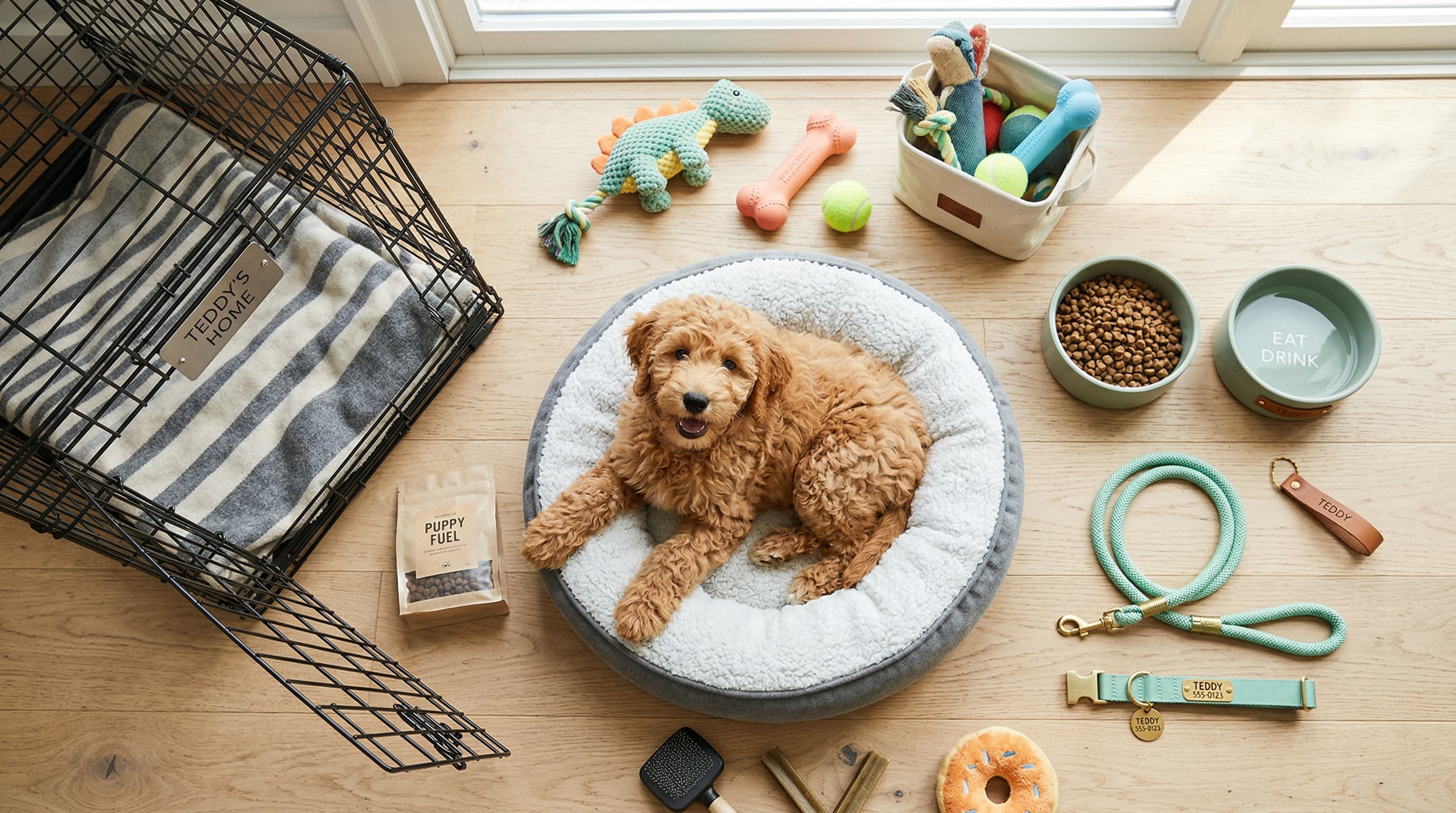
Congratulations — you're bringing home a Goldendoodle puppy! The weeks leading up to your puppy's arrival are almost as exciting as the day itself. But between the excitement, it's easy to forget essentials or feel overwhelmed by the sheer number of decisions. This comprehensive checklist covers everything you need to buy, prepare, and know before your Goldendoodle puppy walks through the door — plus a first-week survival guide to help you both settle in smoothly.
Essential Supplies Checklist
Get these items before your puppy comes home. Having everything ready in advance means you can focus on bonding with your new pup instead of making emergency pet store runs.
Crate and Confinement
- Wire crate with divider panel: Buy the adult-appropriate size (36" for Mini, 42" for Medium, 48" for Standard Goldendoodles) and use the divider panel to make it puppy-sized. The crate should be just large enough for your puppy to stand up, turn around, and lie down. Too much space encourages accidents. As your puppy grows, simply move the divider back.
- Crate pad or mat: A washable, chew-resistant crate pad. Skip plush beds until your puppy is past the chewing phase — many puppies will shred them and potentially swallow the stuffing (a veterinary emergency). Start with a simple, machine-washable pad or even folded towels.
- Exercise pen (x-pen): A foldable exercise pen creates a safe puppy zone when you can't supervise directly. Attach it to the crate during the day so your puppy has a small area to play with access to their crate for napping.
- Baby gates: Use gates to block off rooms and stairs. Puppies are curious, fast, and completely lacking in self-preservation instincts. Limit their access to puppy-proofed areas only.
🛒 Our Top Crate & Confinement Picks
- MidWest iCrate with Divider (42") — Best value crate for Medium Goldendoodles, includes divider
- MidWest iCrate with Divider (48") — Perfect size for Standard Goldendoodles
- MidWest Exercise Pen (36" tall) — Create a safe puppy zone anywhere in the house
- Regalo Baby Gate — Pressure-mounted, no drilling required
Food and Water
- High-quality puppy food: Ask your breeder what they're currently feeding and continue with the same food for at least the first 2-3 weeks to avoid digestive upset. If you want to switch foods, do so gradually over 7-10 days by mixing increasing amounts of the new food with the old.
- Stainless steel or ceramic food and water bowls: Avoid plastic bowls — they harbor bacteria, can cause acne on your puppy's chin, and are easily chewed. Stainless steel is durable, easy to clean, and dishwasher-safe. Consider elevated bowls for Standard Goldendoodles to reduce strain on their neck.
- Slow-feeder bowl: Many Goldendoodle puppies inhale their food, which can cause digestive issues and increase the risk of bloat as they grow — especially Standard-sized Doodles. A slow-feeder bowl or lick mat makes meals last longer and is mentally stimulating too.
- Treats: Small, soft training treats are essential for positive reinforcement. Look for single-ingredient treats or high-value options like freeze-dried liver, chicken, or cheese. Keep treats tiny — your puppy doesn't need a big reward, just a frequent one.
🛒 Our Top Food & Feeding Picks
- Outward Hound Slow Feeder Bowl — Prevents gulping and reduces bloat risk
- Basis Pet Stainless Steel Bowls — Made in the USA, dishwasher safe
- Zuke's Mini Naturals Training Treats — Perfect size for puppy training rewards
- Stewart Freeze Dried Liver Treats — High-value treats puppies go crazy for
Collar, Leash, and ID
- Adjustable collar: A lightweight, adjustable nylon collar for your puppy. You'll go through several sizes, so don't invest heavily in the first one. Make sure two fingers fit between the collar and your puppy's neck.
- ID tag: Get an ID tag with your phone number engraved before your puppy comes home. Even with a microchip, a visible tag is the fastest way for someone to contact you if your puppy gets loose.
- 6-foot leash: A standard 6-foot nylon or biothane leash for walks and training. Avoid retractable leashes — they teach puppies to pull and give you less control in dangerous situations.
- Harness (optional but recommended): A front-clip harness is gentler on your puppy's developing neck and throat than a collar-only setup. It also gives you more control during walks.
Grooming Supplies
Start grooming your Goldendoodle puppy from day one — not because they need it yet, but because you need them to be comfortable with the process before their adult coat comes in. See our full Goldendoodle grooming guide for detailed instructions.
- Slicker brush: Your primary grooming tool
- Metal greyhound comb: For checking your brushing work
- Puppy shampoo: Gentle, tearless formula
- Nail clippers or Dremel: Start nail trims early so your puppy gets used to it
- Ear cleaner: Veterinary-approved ear cleaning solution
- Dog toothbrush and toothpaste: Start dental care early
Toys and Enrichment
- Kong Classic: The single most useful puppy toy ever invented. Fill with peanut butter (xylitol-free!), wet puppy food, or plain yogurt and freeze for a long-lasting activity that also soothes teething gums.
- Rope toys: Good for supervised tug games (which teach impulse control when played correctly) and gentle teething relief.
- Puzzle toys: Goldendoodles are smart. Really smart. They need mental stimulation as much as physical exercise. Snuffle mats, puzzle feeders, and treat-dispensing toys keep their brains engaged.
- Plush toys: Most puppies love a soft toy to carry around and snuggle with. Some breeders send home a blanket or toy with the litter's scent, which helps with the transition.
- Chew toys: Appropriate chew toys (Nylabones, Benebones, bully sticks) satisfy the teething urge and redirect chewing away from your furniture, shoes, and baseboards.
🛒 Our Top Toy & Enrichment Picks
- KONG Classic (Medium) — Fill, freeze, and let your puppy work for their treats
- Outward Hound Nina Ottosson Puzzle — Challenge that Goldendoodle brain
- Benebone Wishbone Chew — Durable chew toy for teething puppies
- Snuggle Puppy Behavioral Aid — Heartbeat toy that eases separation from littermates
- Mammoth Flossy Rope Toy — Great for tug and dental health
Cleaning and Potty Training Supplies
- Enzymatic cleaner: Nature's Miracle or a similar enzymatic cleaner is essential. Regular cleaners don't break down the proteins in urine — your puppy can still smell it and will return to the same spot. Enzymatic cleaners eliminate the odor completely.
- Puppy pads (optional): Some owners use pads as a backup, especially for apartment dwellers. However, many trainers recommend skipping pads entirely and going straight to outdoor potty training to avoid confusion.
- Poop bags: Buy in bulk. You'll use more than you think.
- Paper towels: Stockpile them. Accidents happen. A lot. Especially in the first few weeks.
🛒 Our Top Cleaning Picks
- Nature's Miracle Enzymatic Cleaner — The #1 must-have for potty training
- Earth Rated Poop Bags (900-count) — Bulk supply that lasts months
Puppy-Proofing Your Home
Before your Goldendoodle arrives, get on your hands and knees (literally) and look at your home from puppy height. You'll be amazed at the hazards you discover:
- Electrical cords: Tuck behind furniture or cover with cord protectors. Chewing on electrical cords can cause burns, electrocution, or death.
- Toxic plants: Many common houseplants are toxic to dogs, including lilies, pothos, philodendrons, sago palms, and dieffenbachia. Move them out of reach or remove them entirely.
- Medications and chemicals: Secure all medications (human and pet), cleaning products, and chemicals behind closed doors or in high cabinets. NSAIDs (ibuprofen, naproxen) and xylitol (found in sugar-free gum and some peanut butters) are especially dangerous.
- Small objects: Anything small enough to swallow is a choking hazard or potential intestinal blockage. Pick up coins, hair ties, rubber bands, small toys, socks, and earbuds.
- Trash cans: Use lidded trash cans or move them behind closed doors. Kitchen trash is irresistible to puppies and often contains dangerous items (bones, plastic wrap, chocolate, coffee grounds).
- Shoes and clothing: Close closet doors and pick up laundry. Socks are the most commonly surgically removed foreign body from dogs' stomachs.
Before Pickup Day: Schedule These
- Veterinary appointment: Schedule your puppy's first vet visit within 48-72 hours of bringing them home. Your breeder's health guarantee usually requires this. Bring all paperwork from the breeder (vaccination records, deworming schedule, health certificate).
- Pet insurance: Research and sign up for pet insurance before your first vet visit. Many policies exclude pre-existing conditions, so enrolling before any health records are on file ensures maximum coverage. Companies like Trupanion, Healthy Paws, and Embrace are popular choices for Doodle owners.
- Puppy training class: Enroll in a positive-reinforcement puppy class that starts when your puppy is 10-12 weeks old (most breeders send puppies home at 8 weeks). Early socialization classes are invaluable for building confidence and establishing good behaviors.
- Time off work: If possible, take a few days off when your puppy first comes home. The first 48-72 hours are the most important for bonding, establishing routine, and beginning potty training. Your puppy just left everything they've ever known — they need your presence and reassurance.
The First Week Survival Guide
Day 1: The Big Transition
Your puppy just left their mother, siblings, and the only home they've known. Expect some stress. Keep things calm and quiet. Let your puppy explore one room at a time. Introduce the crate with treats and a cozy blanket. Don't overwhelm them with visitors, new experiences, or too much freedom. Think of day one as a soft landing — gentle, warm, and low-key.
Night 1: The Hardest Night
Your puppy will likely cry the first night. This is completely normal — they're lonely and scared. Place the crate next to your bed so your puppy can hear, smell, and see you. Having your presence nearby dramatically reduces nighttime crying. A warm water bottle wrapped in a towel and a ticking clock can mimic the warmth and heartbeat of littermates. Expect to take your puppy out to potty at least once during the night — 8-week-old puppies can only hold their bladder for about 2-3 hours.
Potty Training Basics
Start potty training the moment your puppy comes home. The formula is simple: take your puppy outside frequently and reward them lavishly when they go in the right place. Specifically:
- Take them out immediately after waking up (morning and naps)
- Take them out 10-15 minutes after eating or drinking
- Take them out after play sessions
- Take them out at least every 1-2 hours during the day
- Always go to the same spot outside
- Reward immediately with a treat and praise when they go outside — not after they come back in, but right there in the moment
- Never punish accidents. Clean up with enzymatic cleaner and take them outside more frequently.
Crate Training
The crate should be your puppy's safe space — never a punishment. Build positive associations gradually:
- Feed meals inside the crate
- Give special treats (Kongs, bully sticks) only in the crate
- Start with the door open, then closed for seconds, then minutes
- Leave the room briefly, then return before your puppy gets upset
- Build duration gradually — never force it
- A puppy can be crated for roughly 1 hour per month of age (max) during the day
Feeding Schedule
Feed your Goldendoodle puppy 3 meals per day until they're about 6 months old, then transition to 2 meals per day. Consistent feeding times create consistent potty times, which makes house training easier. Follow your breeder's recommended portions initially, then adjust based on your vet's guidance at your first appointment. Keep your Goldendoodle at a lean, healthy weight — you should be able to feel (but not prominently see) their ribs.
Common First-Week Mistakes to Avoid
- Too much freedom too soon: Puppies aren't ready for unsupervised access to your whole house. Use the crate and x-pen to manage their environment. Freedom is earned as they learn the rules.
- Inviting everyone over immediately: Your puppy needs to bond with your family first. Wait at least a week before introducing visitors, and keep initial meetings calm and controlled.
- Skipping the vet visit: Even if your puppy seems perfectly healthy, the 48-72 hour vet check is essential for establishing a baseline and catching anything the breeder's vet may have missed.
- Inconsistent rules: If the puppy isn't allowed on the couch as an adult, don't let them on the couch as a puppy. Consistency from day one prevents confusion and behavioral problems later.
- Neglecting socialization: The socialization window closes around 16 weeks. Safely expose your puppy to different people, sounds, surfaces, and experiences while keeping health risks in mind (avoid dog parks and high-traffic areas until fully vaccinated).
The Bottom Line
Preparation is everything. The families who have the smoothest transition with their new Goldendoodle puppy are the ones who did their homework beforehand — buying supplies early, puppy-proofing thoroughly, scheduling the vet visit, and having a plan for potty training and crate training before the puppy even arrives.
The first week is intense. You'll be tired, your puppy will have accidents, and you might wonder what you got yourself into at 3 AM when the crying won't stop. But it gets better — fast. Within a few weeks, your Goldendoodle will settle into a routine, and you'll begin to experience the incredible bond that makes this breed so special.
Starting your Goldendoodle journey? Doodle Bliss puppies come home with a comprehensive take-home packet including vaccination records, deworming history, a sample of their current food, a comfort item with their litter's scent, and a detailed puppy care guide to set you up for success from day one.