
Goldendoodle vs Labradoodle: Complete Comparison
Last updated: 2026-03-24
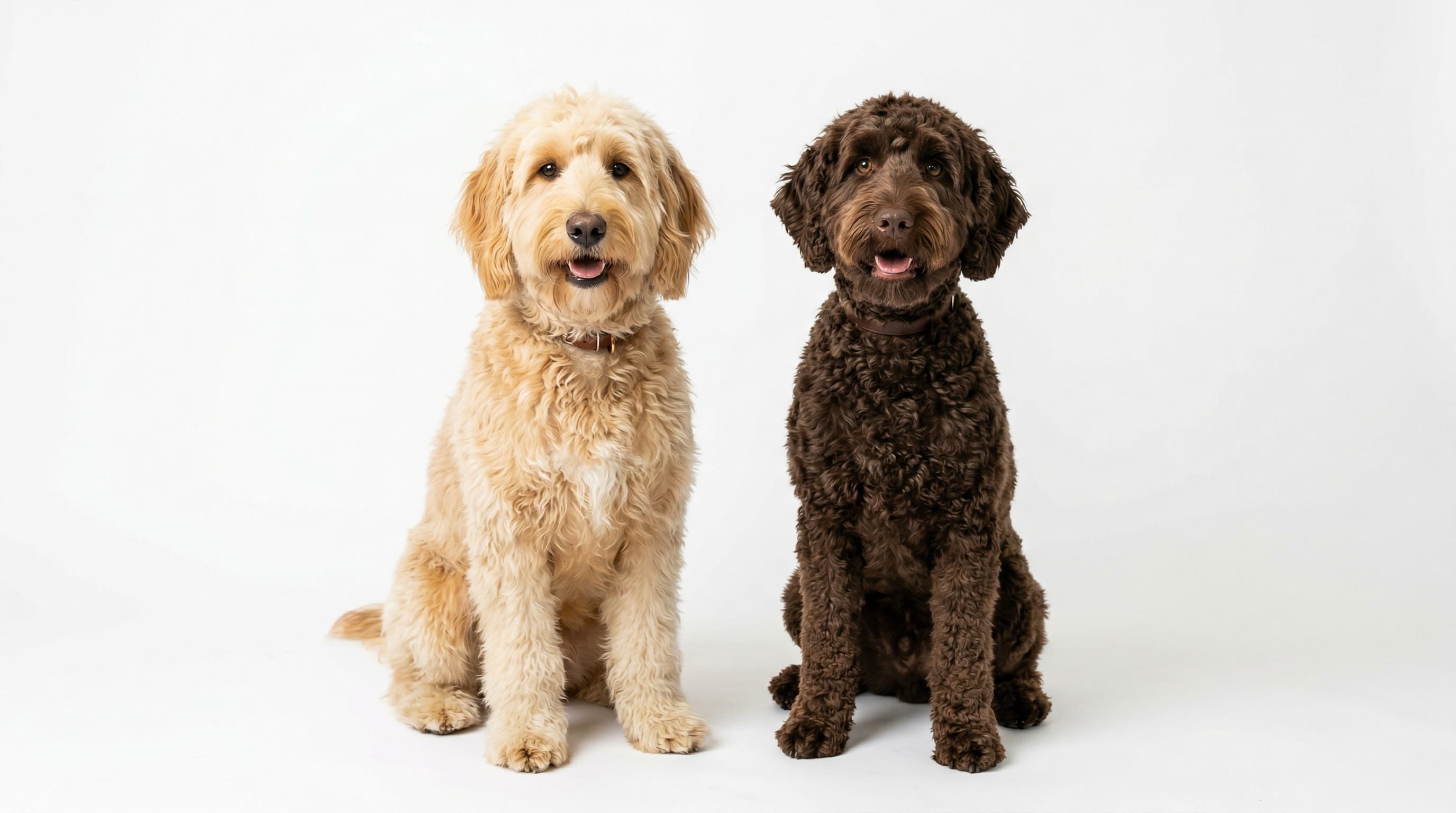
If you're shopping for a Doodle, two breeds will dominate your search results: the Goldendoodle and the Labradoodle. Both are Poodle crosses beloved for their low-shedding coats, friendly dispositions, and teddy-bear looks. But beneath the surface, these two breeds have meaningful differences in temperament, energy level, coat maintenance, and more. In this in-depth comparison, we'll break down everything you need to know so you can decide which Doodle is the right fit for your family.
Origins: Where Each Breed Comes From
The Labradoodle came first. The breed was pioneered in Australia in the late 1980s by Wally Conron, who was attempting to create a hypoallergenic guide dog for a visually impaired woman whose husband was allergic to dogs. He crossed a Standard Poodle with a Labrador Retriever, producing a litter that included a puppy with a low-shedding coat suitable for service work. The Labradoodle quickly gained popularity as both a service dog and family companion.
The Goldendoodle followed in the 1990s, bred by crossing a Golden Retriever with a Poodle. Breeders were inspired by the Labradoodle's success and wanted to combine the Golden Retriever's legendary gentle temperament with the Poodle's intelligence and low-shedding coat. The Goldendoodle quickly became one of the most popular designer breeds in North America.
Both breeds share the Poodle parent, which is why they have so much in common. The key differences stem from the other parent — the Golden Retriever vs. the Labrador Retriever. While these two retrievers are similar, they have distinct personality traits that carry through to their Doodle offspring.
Temperament and Personality
This is often the deciding factor for families, and it's where the Golden Retriever vs. Labrador distinction really matters.
Goldendoodle Temperament
Goldendoodles tend to be gentle, patient, and eager to please. They inherit the Golden Retriever's famously soft disposition — that willingness to sit quietly beside you, the patience with small children, the natural empathy that makes them exceptional therapy dogs. They are affectionate to the point of being "velcro dogs" who want to be wherever you are. Most Goldendoodles are moderately active, happy with a good walk or play session but equally content to lounge on the couch. For a deeper dive, read our complete Goldendoodle temperament guide.
Labradoodle Temperament
Labradoodles tend to be higher energy, more exuberant, and slightly more independent. The Labrador Retriever is a working dog at heart — bred for retrieving game in cold water, running through fields, and working long days. Labradoodles often inherit this drive. They may be more bouncy and excitable, especially as puppies and adolescents. They're still incredibly friendly and social, but they often have an "on" switch that takes longer to turn off compared to Goldendoodles.
Bottom line: If you want a calmer, more naturally gentle dog — especially for families with young children or elderly family members — the Goldendoodle typically has the edge. If you want a high-energy adventure buddy for hiking, running, and outdoor activities, the Labradoodle may be a better fit.
Size Comparison
Both breeds come in Standard, Medium, and Miniature sizes, and the size is primarily determined by the Poodle parent. However, there are slight differences:
- Standard Goldendoodle: 50–90 lbs, 20–26 inches tall
- Standard Labradoodle: 50–65 lbs, 21–24 inches tall
- Mini Goldendoodle: 15–35 lbs
- Mini Labradoodle: 15–25 lbs
Standard Goldendoodles tend to be slightly larger on average than Standard Labradoodles because Golden Retrievers are generally bigger-boned than Labrador Retrievers. The difference is modest — usually just a few pounds — but if you're looking for the biggest possible Doodle, a Standard Goldendoodle is your best bet. For detailed sizing information, see our Goldendoodle sizes guide.
Coat Type and Shedding
Both breeds can have straight, wavy, or curly coats depending on their generation and genetic makeup. However, there are some tendencies worth noting:
Goldendoodles are slightly more likely to have the signature wavy "teddy bear" coat that most people picture when they think of a Doodle. The Golden Retriever's longer, silkier coat combines beautifully with the Poodle's curls to produce that flowing, photogenic look.
Labradoodles can also have gorgeous coats, but the Labrador's shorter, denser coat sometimes produces puppies with "hair" coats (flat, short coats that shed more) — particularly in F1 litters. Australian Labradoodles, which have been bred for multiple generations, tend to have more consistently curly, low-shedding coats.
Bottom line: In terms of shedding, both breeds perform similarly when you compare the same generation (F1B to F1B, for example). The key to a low-shedding Doodle is the generation and coat genetics, not the breed itself. Read our guide on whether Goldendoodles shed for the full breakdown.
Grooming Requirements
Both breeds require significant grooming maintenance. If you choose either a Goldendoodle or a Labradoodle, you're signing up for regular brushing (at least 3-4 times per week, ideally daily for curly coats) and professional grooming every 6-8 weeks.
Goldendoodles with longer, wavier coats may be slightly more prone to matting around the ears, collar area, and behind the legs. Labradoodles with curlier coats may mat closer to the skin. In either case, a quality slicker brush and regular line-brushing technique are essential.
The grooming costs are virtually identical for both breeds. Budget $60-$100 per professional grooming session depending on your area and the dog's size. Over a year, that's $500-$1,000 in grooming costs alone — something many first-time Doodle owners underestimate.
Trainability and Intelligence
Both Goldendoodles and Labradoodles are highly intelligent — they're half Poodle, after all, and the Poodle is one of the smartest dog breeds in the world. Both Golden Retrievers and Labrador Retrievers are also in the top ten for canine intelligence, so you really can't go wrong with either breed.
That said, there are subtle differences in training style:
- Goldendoodles tend to be more sensitive and responsive to gentle, positive reinforcement. They may shut down if corrected too harshly. Their eagerness to please makes them highly biddable — they want to do what you ask.
- Labradoodles tend to be slightly more resilient and independent. They are enthusiastic learners but may be more easily distracted by exciting stimuli (birds, squirrels, other dogs). They can handle a bit more firmness in training without becoming discouraged.
Both breeds excel in obedience, agility, therapy work, and service dog roles. The Goldendoodle's sensitivity makes it particularly well-suited for therapy and emotional support work, while the Labradoodle's drive makes it a strong candidate for more demanding service dog tasks.
Health Considerations
Both breeds benefit from hybrid vigor, particularly in first-generation (F1) crosses. They share many of the same potential health concerns because Golden Retrievers and Labrador Retrievers are prone to similar conditions:
- Hip and elbow dysplasia — common in both parent breeds
- Progressive Retinal Atrophy (PRA) — an eye condition both breeds carry
- Allergies and skin issues — fairly common in Doodles in general
- Ear infections — the floppy ears and hair growth in the ear canal make both breeds susceptible
One notable difference: Golden Retrievers have a significantly higher rate of cancer compared to Labrador Retrievers. Studies suggest that up to 60% of Golden Retrievers will develop cancer in their lifetime, compared to about 30-35% for Labradors. This doesn't mean your Goldendoodle will get cancer — the Poodle genetics help mitigate this risk — but it's a factor worth being aware of.
Regardless of which breed you choose, always select a breeder who performs comprehensive health testing on all parent dogs. OFA hip and elbow evaluations, cardiac exams, and genetic testing (such as Embark or Pawprint Genetics panels) should be the absolute minimum. Learn more about health concerns in our Goldendoodle health guide.
Cost Comparison
Pricing for both breeds is remarkably similar:
- Goldendoodle: $2,000–$5,000 from a reputable breeder
- Labradoodle: $2,000–$5,000 from a reputable breeder
- Australian Labradoodle: $2,500–$5,000+ (often priced at the higher end due to multi-generational breeding programs)
Lifetime costs — including food, grooming, veterinary care, and supplies — are virtually identical for both breeds. Budget $1,500–$3,000 per year for ongoing expenses. Check our Goldendoodle cost breakdown for detailed pricing.
Which One Should You Choose?
Here's a simple decision framework:
- Choose a Goldendoodle if: You want a gentle, patient family dog. You have young children. You prefer a calmer energy level. You love the classic teddy bear look. You want a natural therapy or emotional support dog.
- Choose a Labradoodle if: You lead an active lifestyle. You want a high-energy adventure partner. You don't mind a more exuberant puppy phase. You're interested in competitive dog sports. You prefer a slightly more independent dog.
- Choose an Australian Labradoodle if: You want the most predictable, consistent coat and temperament. You're willing to pay a premium for a well-established breeding program. You need the most reliably low-shedding coat possible.
The Bottom Line
You honestly can't go wrong with either breed. Both Goldendoodles and Labradoodles are wonderful, intelligent, affectionate dogs that make incredible family companions. The differences between them are real but relatively subtle — far less significant than the differences between individual dogs within each breed.
The most important factor in getting a great dog isn't whether you choose a Goldendoodle or a Labradoodle — it's choosing a responsible, health-testing breeder who prioritizes temperament, health, and early socialization. A well-bred Goldendoodle from a great breeder will always outperform a poorly bred Labradoodle (and vice versa).
If you've decided the Goldendoodle is the right fit for your family, we'd love to help you find your perfect puppy. Visit Doodle Bliss to see our available Goldendoodle puppies — every parent is Embark health-tested and every puppy is raised in a loving home environment.
🛒 Our Top Picks for Doodle Owners
- Chris Christensen Big G Slicker Brush — Works perfectly for both Goldendoodles and Labradoodles
- Embark Dog DNA Test — Know your doodle's exact breed mix and health markers
- Ruffwear Front Range Harness — Adventure-ready harness for active doodle families